

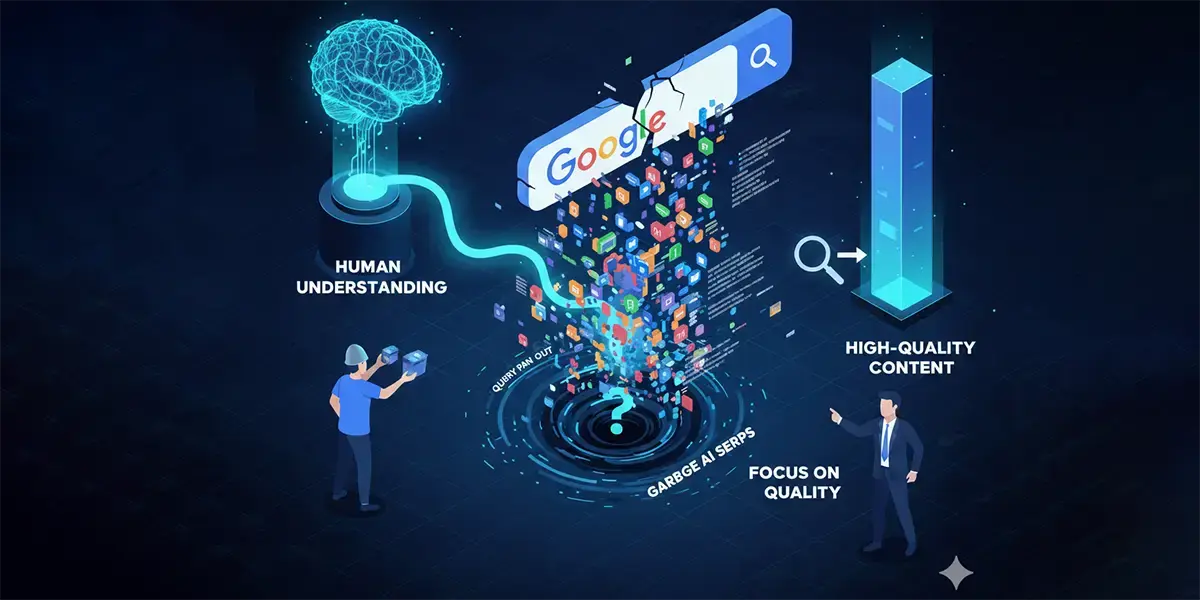
Recently, some big names at Google spoke on a podcast about the future of search. They wanted to answer a common question: do you need to change how you write your website so that AI tools can read it better? Their answer was a simple no, but there is a lot more to the story than they are letting on.
The Myth of Content Chunking
Many experts suggest that you should break your articles into tiny, bite-sized pieces or chunks so that AI can understand them. Google disagrees. They say their systems are smart enough to read a page just like a person does. If your page uses clear headings and lists, you are already doing enough.
Google warns against making two versions of your content. You should not have one version for a human and one for a machine. This is good news for writers, but it ignores the bigger issue of how AI is changing the web.
Why Traffic is Dropping
In the past, you searched for a keyword and clicked a link. Today, Google uses AI to give you long answers right on the search page. This is called query fan-out. Instead of just answering one question, the AI answers three or four at once. While this is fast for the user, it means fewer people actually click on websites. This hurts the people who spend time creating the information in the first place.
The Rise of Garbage Results
Many users feel that Google search results are filled with low-quality or fake content. Even though Google says their systems are getting better, many of us feel it is harder to find a cool, new website than it used to be. The internet is starting to feel like a pile of AI-generated junk rather than a place for discovery.
At Digital 1, we believe that real human expertise is still the most important thing. You can learn more about our approach to SEO services or check out our guide on content strategy to see how we stay ahead of these changes.
What This Means Going Forward
Google wants you to keep writing for people, not robots. That is good advice, but it does not fix the fact that AI is making it harder for good websites to get noticed. We need a search engine that rewards high-quality work instead of just showing us quick summaries.